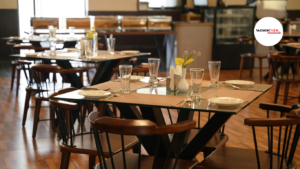
It’s a cold January afternoon – it snowed in the morning, the temperature is just below zero, and a biting wind blows. I arranged to meet Mylene and Christilyn just outside their workplace – a cozy, rustic restaurant next to the production facility where they’ve been employed since early December.
I had to admit to myself that I didn’t know what to expect – I’d heard their story from others, but listening to it firsthand is a completely different experience. Filipino immigrants working in Poland are no longer unusual, but I hadn’t heard of anyone who had taken a path like theirs. They traded Japan, a country advanced culturally and technologically, for Poland. As we meet outside the restaurant and walk in, I wonder what I’ll hear.
The first obvious question I want to ask is why Poland – but I prefer to start at the beginning: why did they leave their home country in the first place?
The answer is simple. The political situation in the Philippines does not favor career growth, education, or development. Supporting a family is difficult, not to mention living comfortably.
– “Back home, unfortunately, either you have money, or you’re in a very difficult situation,” Christilyn explains. I see a hint of sadness on her face. – “Until politics change in the Philippines, we probably won’t think about returning.”
Their first choice was Japan. The geographical and historical proximity of the two countries makes Japan a popular destination for Filipinos. Its aging population, especially renowned for longevity, creates a huge demand for elderly care. This is where Mylene and Christilyn found their roles.
As they recall, it wasn’t easy work. They immediately compare it to what they do now:
– “Here, your body is tired, but your mind rests. There, there was no time for that. The pressure was huge, and the tasks never ended,” Mylene remembers.
Their charges often suffered from dementia, which was itself an immense challenge. On top of caregiving, they had to clean, cook, and do laundry because the facilities didn’t have separate staff for these tasks. I ask about the language – Japanese is considered one of the hardest languages in the world. For a European, with its completely different writing system and complex formalities… I know Polish isn’t easy either, but I’m curious how they see it and how it affects work comfort.
– “What are you talking about? Polish is much harder!” Christilyn laughs. – “So many consonants… At first, we couldn’t understand anything, and you speak so fast and loud that it felt like everyone was arguing. It’s better now, we’re getting used to it, but the first impression was tough.”
– “So Japanese came easier to you?” I ask.
– “Not exactly, but in Japan, you have no choice,” Mylene corrects me. – “To work in Japan, you need a visa, and to get it, you must specify your profession. For a caregiver role, there was a special exam, where you had to prove not only that you could communicate in Japanese but also that you knew a lot of medical and health terminology… It wasn’t easy. And very limiting.”
If either wanted to change fields – say, become a driver or work in a factory – they would have needed a new residence permit tied to the new position. That means the application could have been rejected. Beyond learning and training, the additional burden was that it was hard to change your path once chosen. Failing the exam meant immediate deportation.
All this – physical strain, mental load, bureaucratic pressure – made them seriously consider a change of location. Not just for work, but for life.
Poland appeared gradually in their plans – initially as just one option.
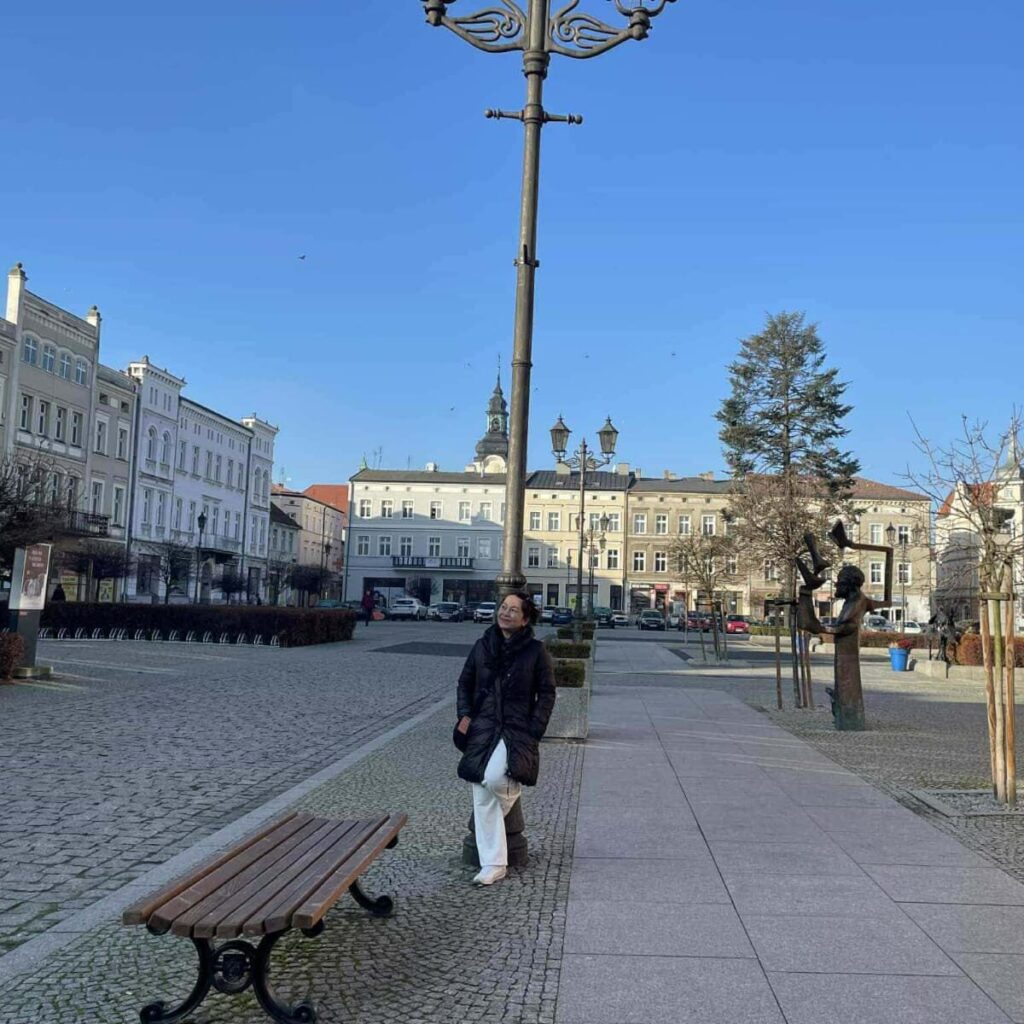
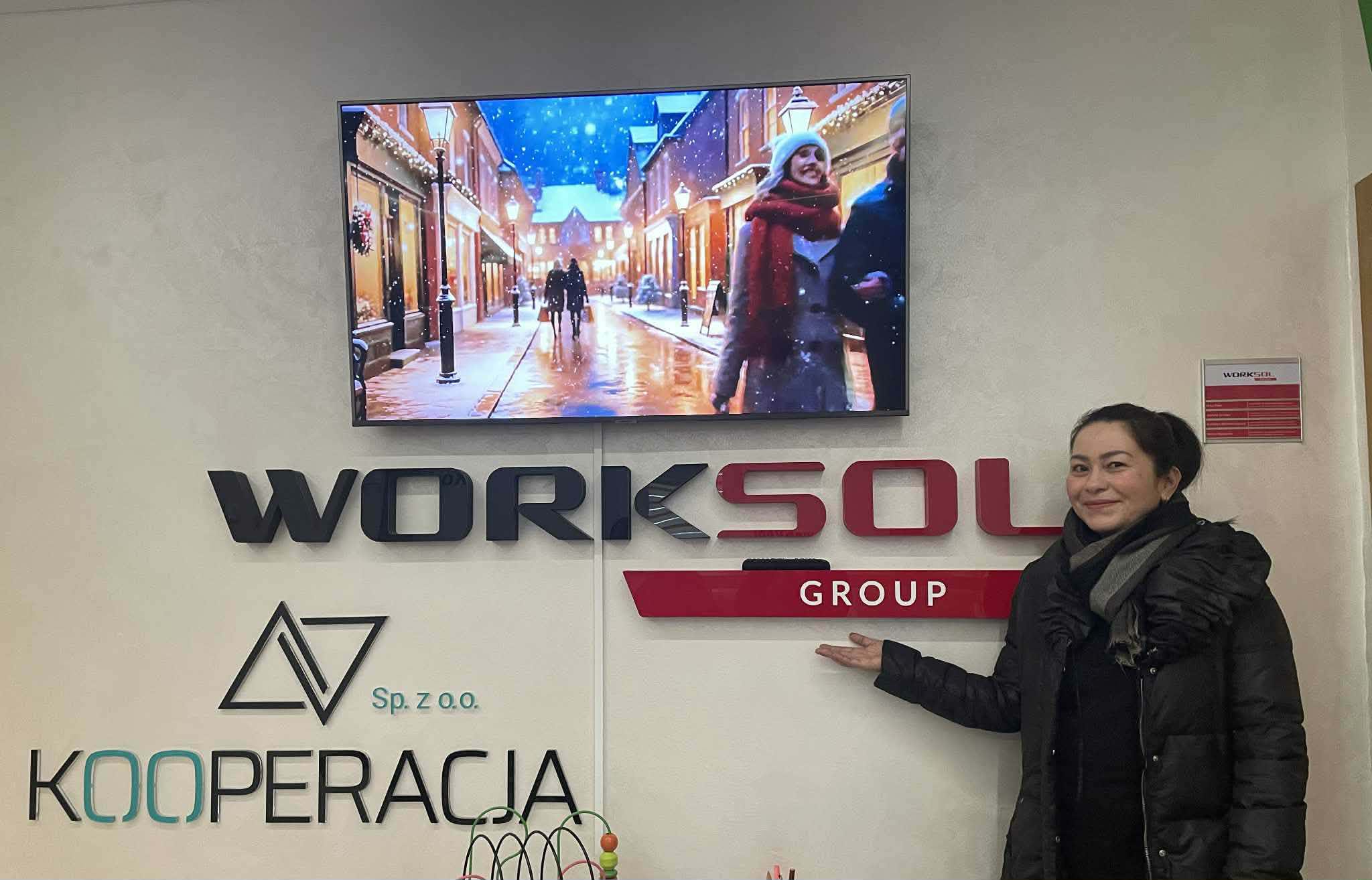
– “We are Christians. In Tokyo, we really missed the holiday atmosphere; it’s hardly celebrated there. Browsing TikTok, we kept seeing images from Poland. Lights, Christmas trees, snow… Beautiful views, beautiful cities,” they describe. – “After a while, we started seeing videos from Miss Kim.”
I immediately thought of Kim – Kim Fernandez, our recruiter from the Dubai office, who is very active on the platform. I was curious if they reached us through her – and it turned out they did.
– “We checked many agencies in different countries, but none had as good reviews as Worksol,” adds Mylene. – “Many looked suspicious; we read some asked for full payment upfront, and if the visa was denied, you were left in the lurch.”
– “What’s on the website is one thing, but the opinions of other migrants mattered more, and they praised Worksol. So we contacted Miss Kim and we’re very happy we did,” Christilyn concludes. – “She helped us throughout, asked how we were, offered support if anything happened… She really took care of us.”
The visa process is never simple – there’s no guarantee of approval. And that’s exactly what happened with Mylene and Christilyn. At first, they were denied.
– “Miss Kim immediately stepped in. Thanks to her and the agency, we managed to appeal. We even heard the owner got involved, which was such a pleasant surprise! We were afraid we’d be alone in this, so we’re really glad we trusted the reviews and chose Worksol.”
Mylene and Christilyn started physical work in a production plant near Kępno in early December 2025. They agree the work is hard, mostly physical, but that doesn’t bother them. They repeatedly emphasize a key difference from Japan:
– “Here we aren’t stressed mentally. The body is tired, but the mind is calm,” they say.
It’s precisely this lack of emotional pressure that makes them feel better than before, even with physical fatigue. They miss biking to work as they did in Tokyo, but hope to resume it when the weather warms.
Finally, I ask about things that seem mundane but reveal what life is like in a foreign country. I want to know what surprised them, what amazed them, what they want to see and do.
– “The language was definitely the first surprise. But once you get used to it, Poles are very kind and helpful. We’ve never had trouble communicating in English.”
– “And we were surprised by how you look,” Mylene adds.
– “How we look?” I ask, not sure how to take it.
– “Yes. Poles are very diverse – tall, short, blond, dark, red… In the first days, we walked around looking at people. Polish men are handsome, women beautiful!” she laughs.
– “We haven’t had a chance to try real traditional Polish cuisine yet, because we usually eat at the plant,” Christilyn tells me, with a plate of potato pancakes and sour cream. Mylene nods, busy with pork cutlet and potatoes. They’re delighted when I point out they’ve accidentally ordered classic Polish dishes.
The topic of legal residence comes up as we talk about their plans. Besides wanting to visit Kraków, Wrocław, Gdańsk, and Warsaw, they dream of traveling to Italy. Their Polish residence permit allows them, to some extent, to travel freely within the Schengen zone.
I hesitate before asking about attitudes toward foreigners. With increasingly visible far-right nationalist voices in public space, people like Mylene and Christilyn might face different experiences. I ask if anything unpleasant has happened.
– “Not so far,” they say. – “Poles treat us very well, and the Filipino community here works great. Everyone shares tips, impressions, recommendations… We feel welcome, though we’ve heard warnings it may be different elsewhere.”
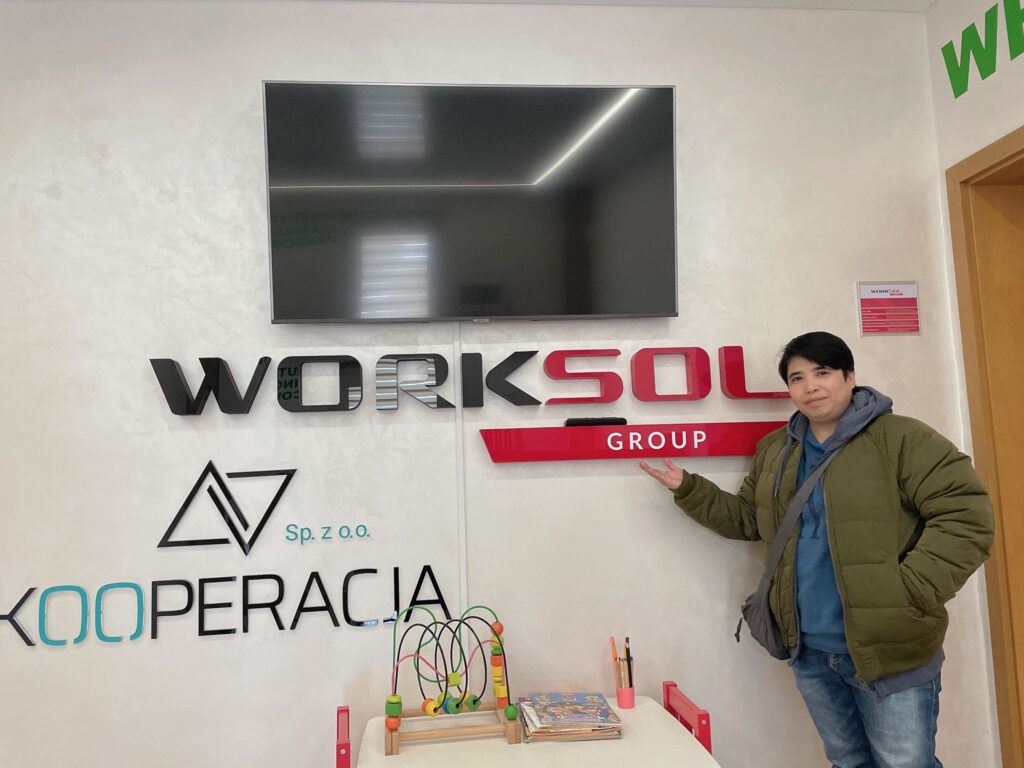
Mylene and Christilyn do not see Poland as just a temporary stop. They openly say they want to stay longer, as long as they have stable work and opportunities to grow. They’re happy they could change jobs if needed, though they aren’t planning to.
Their story shows that labor migration isn’t just about wages. It’s also about finding your place in the world, needing security, support with formalities, and knowing you won’t be left on your own. For Mylene and Christilyn, Poland has become that place – not perfect, but real, and offering a chance for a calmer life.
Interview conducted by Michał Woyczyński