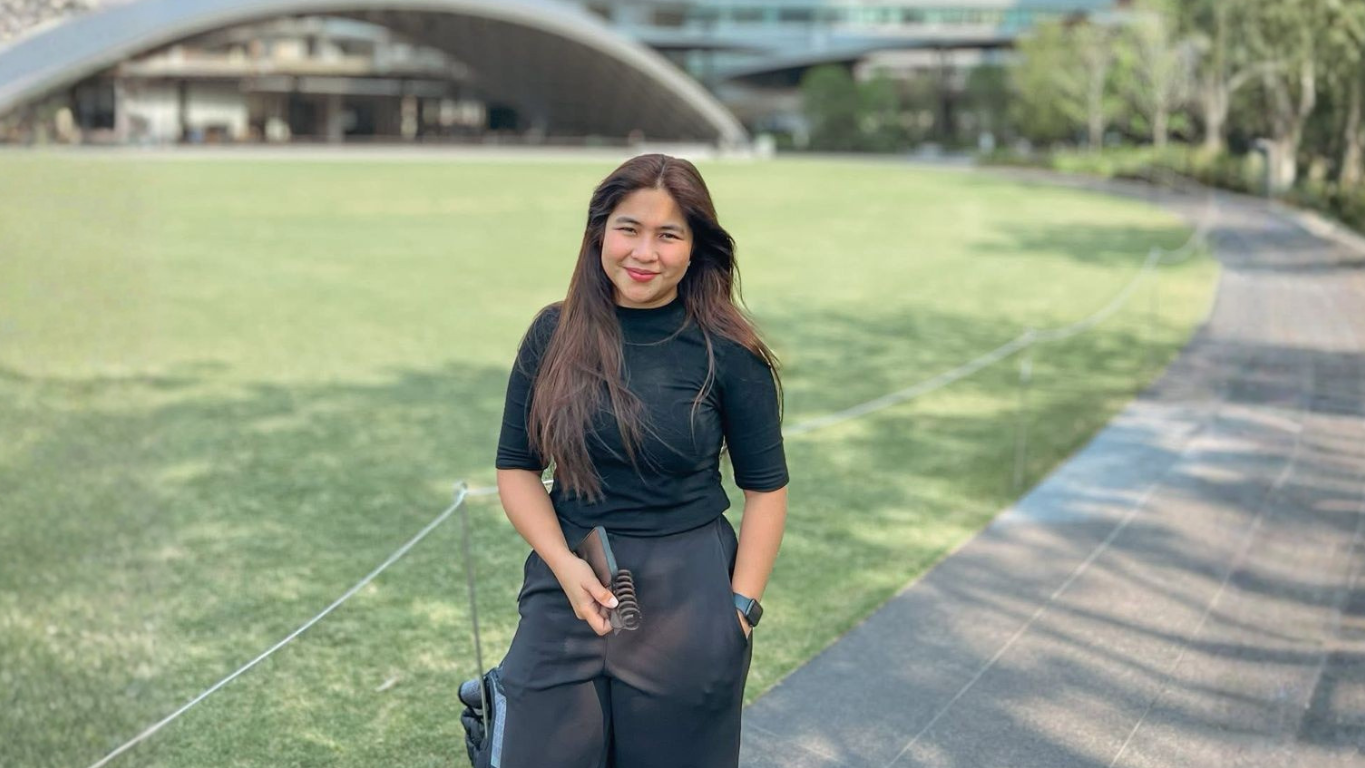
Kim Fernandez’s story belongs to the latter.
Today she lives in Dubai and works in the recruitment industry. On a daily basis, she talks to people who – just like she once did – are considering moving abroad. She helps them understand the migration process, find employment, and make decisions that can change their lives. Yet she still remembers very clearly what the first evening in a foreign country feels like – when you are tired, lost, and don’t have the courage to tell your family that you cried.
In recent months, another chapter has been added to that story – life in a city where drones and fighter jets can sometimes be heard in the night sky.
When the world was shaken by news of the sudden outbreak of war in the Middle East, many of us followed the developments closely. And when it turned out that Dubai had also come under attack, I knew I had to reach out to Kim. We couldn’t meet face to face, but that’s what messaging apps are for.
Kim grew up in the Philippines as an only child. Her father worked abroad, so for most of her childhood she was raised by her mother and her grandmother, whom she calls “Gama.” The family was very close, and from an early age Kim knew she was the most important person in their lives.
When she was eleven years old, her father passed away. The loss shook the family, but it also brought Kim even closer to her mother and grandmother.
“I was an only child, so my mom was very protective. I understand that – it was just the two of us left. I grew up comfortably, but also with the feeling that I had to be strong. I always say I was raised like a princess, but at the same time forced to become a warrior,” she says.
Let’s be honest – being an only child has its advantages, but it’s not always easy. I know something about that myself. Just like in Kim’s case, my parents were very caring and protective, and I had to fight with them even over something as simple as taking my first part-time job at the age of twenty. Comfort often comes with limitations and strict supervision. Something for something.
Despite all that care, Kim was growing up in a reality where, for many young Filipinos, migration is almost an obvious thought. In a country where millions of people work abroad, the idea of leaving one day becomes a natural part of growing up.
At first, however, it was more a fantasy about travelling and exploring the world than a concrete life plan.
After graduating from university, Kim still didn’t have a clear vision of what she wanted to do with her life. Her mother and grandmother decided to give her a gift – her first solo trip. They chose Singapore.
While preparing for the trip, Kim called one of her closest friends and asked if she would like to travel with her. That was when she learned something surprising – her friend was no longer living in the Philippines.
She had moved to Dubai.
She suggested that after finishing her trip to Singapore, Kim could visit her there for a week. For someone raised in such a protective household, it sounded almost impossible. As Kim recalls, throughout her entire childhood she had not even been allowed to stay overnight at a friend’s house.
“I told her it was impossible. She knew how overprotective my mom was. But I asked anyway. There were a lot of conversations, a few tears, and plenty of promises… My friend even messaged my mom herself. And eventually I got permission.”
Her grandmother lent her some money for the visa. That’s how the journey that would eventually change her entire life began.
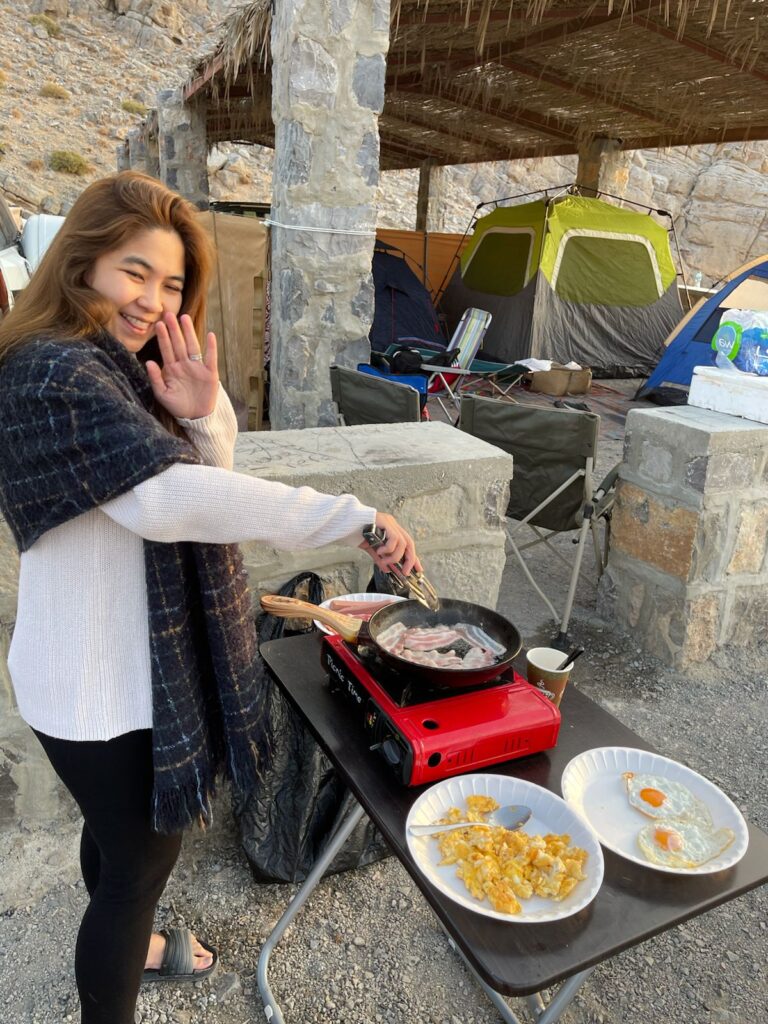
When Kim arrived in Dubai, everything felt like a holiday. A new city, a new culture, friends, sightseeing. She wasn’t thinking about work or staying longer.
Only after a few weeks did the thought appear that maybe she could try to stay.
“It wasn’t some big moment of decision. It was more like suddenly finding myself in my ‘big girl moves’ era. I was doing things I had never done before – but honestly, I had no idea where it would lead.”
The friend who had invited her had to return to her professional responsibilities earlier than planned, but she suggested one thing to Kim: send out a few CVs and see what happens.
Kim did.
One company replied.
The offer was modest, but for her it meant an opportunity. She knew that if she returned to the Philippines, it would be easy to fall into a comfortable life where she depended on her family.
“I thought I had to check whether I could manage on my own. I wanted to prove to myself that I could do it.”
She accepted the job offer – the very first one she received.
The romantic vision of life abroad quickly collided with reality.
Kim lived in a small room shared with other people. She slept on the top bunk of a bunk bed – it was the cheapest option available. After work she would return home exhausted, but her day was far from over. She still had to do laundry – something she had never done before. In the Philippines someone in the family had always taken care of it.
She had brought clothes for only two weeks, so she had to do laundry almost every other day.
She also didn’t know how to cook.
“Sometimes I ordered food, but often I simply couldn’t afford it. There were nights when I fell asleep hungry because I was too tired to cook,” she recalls. “Luckily, my roommate agreed to include me in her meal planning. I contributed to the groceries, and she made sure we had something to eat.”
In the evenings, she often cried.
But her mother never found out.
“I never told her that I cried. I knew that if she found out, she would immediately force me to come back home.”
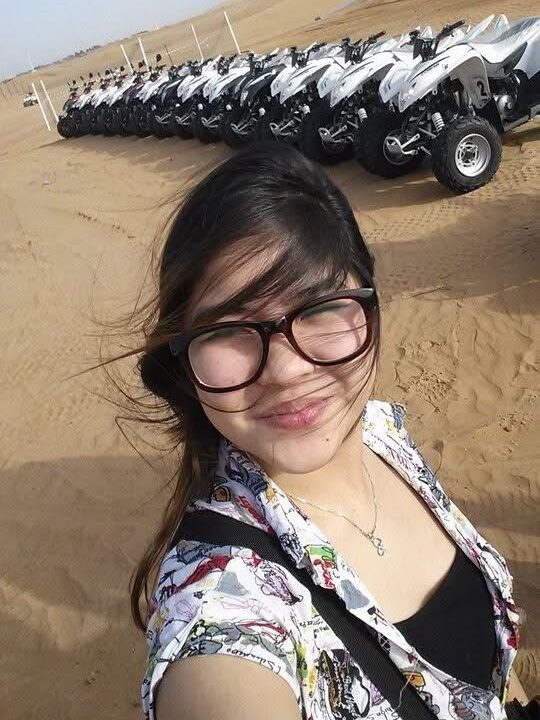
For Kim, the cultural shock was also a huge challenge. She grew up in a provincial part of the Philippines surrounded by nature. She loved hiking, mountains, and spending time outdoors.
Dubai was a completely different world.
“It was a real concrete jungle. Everything was happening so fast. People were rushing to work, rushing to the metro, rushing back home. The metro during rush hour is always packed, and the heat in the summer reaches even 50 degrees. Back home 38 degrees is already normal for us, but this climate was much harder.”
Kim still remembers one situation from her first months in the city. It strangely reminds me of our very own Polish struggles with… certain hygiene challenges in public transport.
“I’m 152 centimeters tall. In the metro everyone was taller than me and holding the rails above their heads. I stood between them, sometimes for 45 minutes, and… honestly, I don’t want to go into too much detail. But you probably understand what I mean. It was a very intense experience.”
Over time, Kim began to see both the huge opportunities Dubai offers and its less visible sides.
The city is safe, highly organized, and incredibly international. In one place you can meet people from dozens of different countries.
At the same time, working in HR allowed Kim to see mechanisms that are rarely discussed openly. In many companies there are still informal salary divisions based on nationality.
“No one talks about it openly because officially it’s not allowed. But working in HR, I saw how often salary depends on your passport rather than your competence.”
There is also another feature of expatriate life in Dubai – the lack of long-term certainty. Many people live there for ten, twenty, or even thirty years, but their legal status still depends on a work visa.
Kim’s first job in Dubai was also the beginning of her career in HR. Over time she focused more on recruitment and started working with candidates from many different countries. Today, her own migration experience has become one of the most important elements of that work.
“When I talk to candidates, I truly understand their situation. I know what it means to leave your family and try to build a life somewhere else.”
In her work she also encounters more difficult stories. Some candidates arrive after paying thousands of dollars to intermediaries, only to discover that the job waiting for them is completely different from what they were promised.
“I’ve seen people who were scammed and still stay, because their families back home are counting on that money.”
They cannot easily change jobs. For many of them it would mean having to return home – and without the money that was the reason they left in the first place. So they stay, working below their qualifications, in jobs that are too physically demanding, poorly paid, or simply not suited to their skills.
But they often have no other choice.
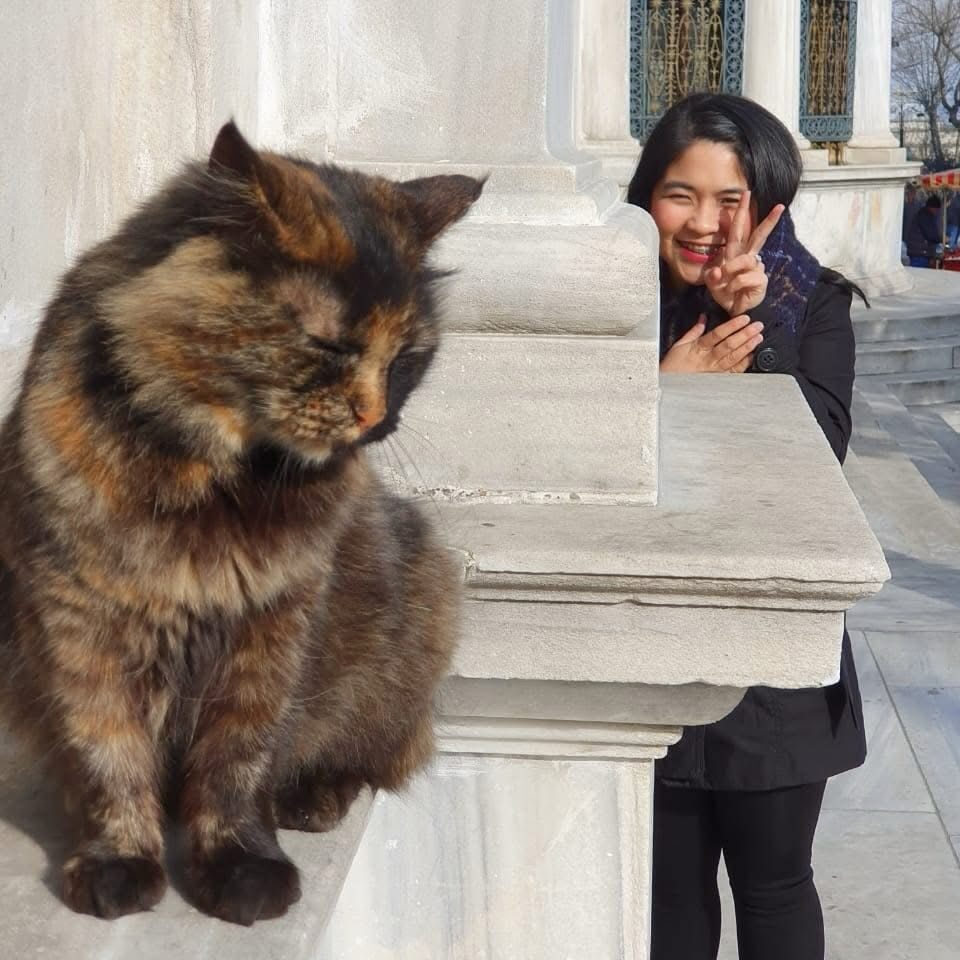
More than ten years have passed since Kim first arrived in Dubai as a tourist. Not long after, as she jokingly says, her “ex-boyfriend” joined her there. Ex – because today he is her husband, and the father of their three-year-old son.
“I say I have two kids: one three-year-old and one forty-year-old,” she jokes, referring to her husband.
Apparently Poland, the Philippines, and Dubai have more in common than we might think, because this joke seems to work across continents. Gentlemen of all nationalities – it seems we still have a long way to go if our reputation travels this well regardless of culture.
Dubai has become their second home. But even after more than a decade, they still feel like guests.
“We can live here for decades, but we are still dependent on visas. In a way, we will always feel like guests.”
The past weeks have brought events Kim never expected to experience.
The conflict in the Middle East meant that war – although it is not taking place directly in Dubai – suddenly became part of everyday life in the region.
The first days were especially difficult.
“I never imagined I would experience war firsthand.”
At night, drones and fighter jets could be heard flying over the city. Phones were triggering alarm alerts. The news reported shrapnel falling from intercepted missiles.
“The hardest part was that I have a small son. As a mother, you can’t stop thinking about what might happen next.”
For several days many companies – especially British and American ones, as well as those located near their offices – allowed employees to stay at home, and schools moved the spring break earlier.
But the city did not stop completely. Shops and shopping malls remained open.
The hardest part turned out to be something else.
Uncertainty.
Today life in Dubai is gradually returning to normal, as much as possible. But the events of the past weeks have changed how many residents think about the future.
Kim and her husband have started discussing what their next step should be – whether they should stay in Dubai or consider moving to another country. Many expatriates are having similar conversations. Kim also sees it in her work. Candidates are increasingly asking about opportunities abroad, not only in Poland (where the subject of painfully slow migration procedures inevitably comes up), but also in other European countries.
Geopolitical uncertainty is beginning to influence migration decisions.
Kim does not speak about regret when she looks back at the decision she made years ago. Dubai gave her a lot – professional experience, personal development, and the life she built with her family. At the same time, the war has changed her perspective.
“I don’t regret staying here,” she says. “I’ve grown a lot here and learned so much. But now everything looks different. Our plans, our goals, and the way we think about the future have changed.”
Despite the uncertainty, Kim tries to look ahead with hope.
“Maybe this is just God’s way of redirecting us to something better.”
That sentence captures her story well.
The story of a girl raised like a princess who learned how to be a warrior. An immigrant who once cried in a rented room in Dubai and today helps other people find their own path.
And a mother who – like millions of migrants around the world – still asks herself one simple question:

Interview conducted by Michał Woyczyński